
RB2B AI: ASK US ANYTHING
B2B conversion rate optimization goes beyond forms and buttons. Real growth comes from turning traffic into a qualified pipeline. Optimize the full buyer journey, from traffic quality and messaging to visitor recovery and sales handoff. Most visitors never convert, so identify, engage, and recover lost opportunities before they disappear.
Most B2B websites focus on form fills, but most buyers leave without converting. If you're attracting the wrong traffic, losing high-intent visitors, or sending weak leads to sales, a higher conversion rate won’t fix the pipeline.
The solution? Optimize the entire B2B buyer journey, from traffic and messaging to CTAs, visitor identification, buying signals, and sales handoff. This blog shares 10 B2B conversion rate optimization strategies to turn more website activity into qualified pipeline and revenue.
You’ll learn what to optimize at every stage, and which metrics actually matter. Alongside that, you’ll understand how to recover visitors who never fill out a form and how to connect CRO efforts to revenue.
Conversion rate optimization improves the share of visitors who take action. In B2C, that action is often a quick purchase. B2B works differently. Your buyers research for weeks or months. They compare vendors, loop in colleagues, and rarely buy on impulse.
So a single form fill means little on its own. What matters is pipeline: qualified buyers your sales team can close. Modern lead generation software ties each visit to a real buyer. Smart B2B conversion rate optimization counts revenue, not just clicks. It looks at the full path from visit to closed deal.
Remember the buying committee too. Most B2B deals involve several stakeholders, not one buyer. Each visitor may be a single voice in that group. So, optimization means reaching a team, not a single lead.
Traditional CRO focuses on one moment: the form. That worked when buying was simple. B2B buying is not simple. Three problems break the old playbook:
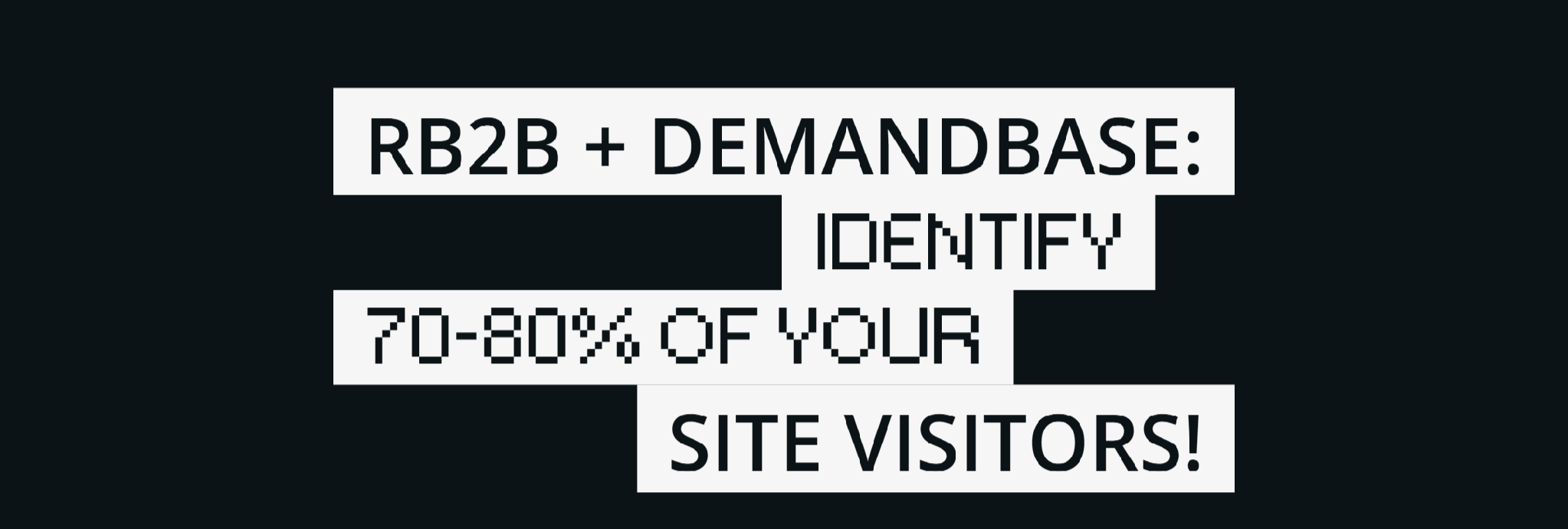
Consider the scale of the anonymous problem. RB2B reports it can identify 70-80% of website traffic (RB2B). That means most of your visitors stay hidden without the right tools. You cannot optimize what you cannot see.
Ignoring anonymous traffic quietly caps your growth. You keep polishing the same small slice of visitors. Meanwhile, your best buyers slip away unseen. The fix is to widen the funnel, not just the form.
Speed makes the gap worse. Old CRO waits for a form, then a reply. By then, your buyer has moved on. Real-time signals help you close that timing gap.
This guide comes from RB2B, a leader in website visitor identification. RB2B now serves over 1,500 customers worldwide. Many run sales cadences based on their individual-level visitor data. The team sees daily what turns anonymous traffic into pipeline. That experience shapes every strategy below.
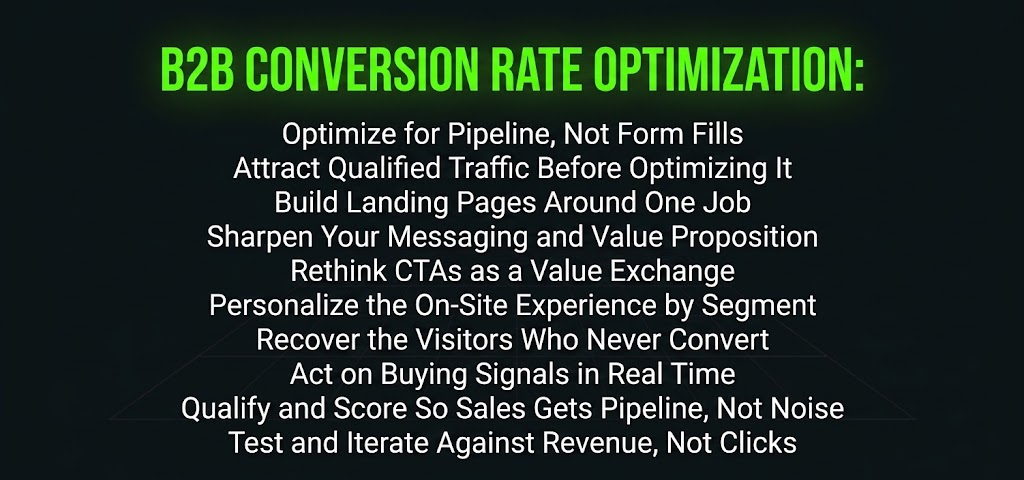
Each strategy below maps to a stage of the buyer journey. Use them in order, or fix your weakest link first. Together they turn scattered tactics into a system:
Start by changing what you measure. Form submissions feel like progress. But many forms bring junk leads and tire-kickers. A high conversion rate can still starve your pipeline.
Tie every optimization to revenue instead. Ask one question: did this change create a qualified pipeline? Track the metrics your sales team actually respects:
This shift changes your priorities fast. You stop celebrating clicks. You start hunting for buyers. When a pipeline becomes the goal, weak tactics fall away. Your whole funnel gets sharper.
Beware the vanity trap. A cheap ebook can spike form fills overnight. Yet almost none of those leads ever buy. Judge each offer by the pipeline it produces.
Share these numbers with your revenue team. When goals match, sales and marketing pull together. Aligned teams improve far faster.
Outcome: you optimize for revenue, not vanity metrics.
No amount of testing fixes the wrong audience. If your traffic is off, conversions stay weak. So optimization starts upstream, with the visitors you attract.
Focus your content and ads on your ICP. Target the keywords your buyers actually search. Speak to their industry, role, and problem. One thousand right-fit visitors beat ten thousand random ones.
Great content pulls in the right buyers early. Answer the questions your prospects actually ask. Rank for problem-based searches, not just brand terms. Helpful content earns trust before any sales touch.
Audit your top traffic sources by quality, not volume:
Then double down on what works. Cut spend on traffic that never converts. Feed your funnel with people who can buy.
Watch intent, not just fit. A visitor from a review site often beats a cold social click. Trace which sources lead to real closed deals.
Outcome: better inputs make every later step easier.
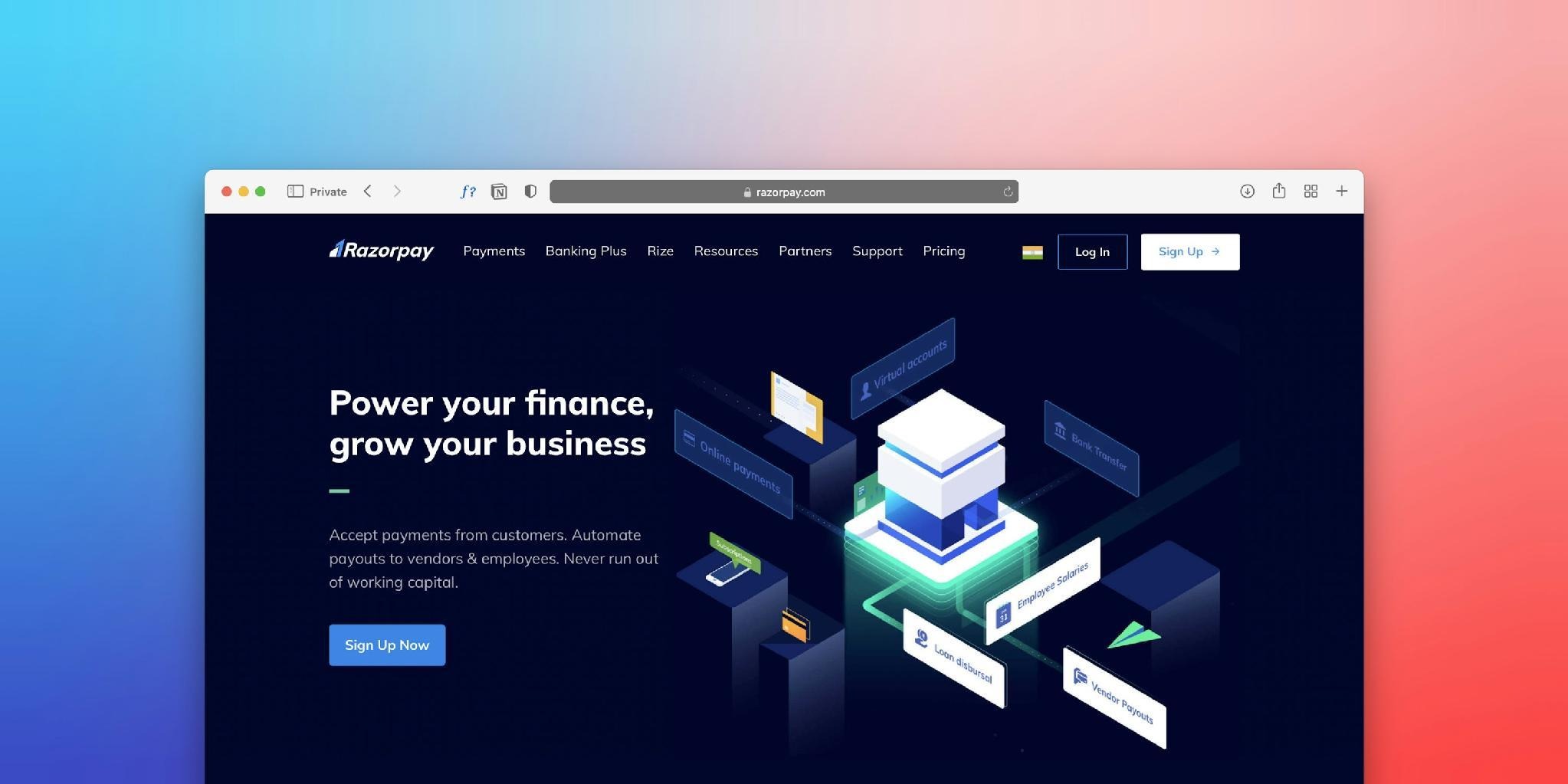
Source: https://unsplash.com/photos/a-computer-screen-with-a-web-page-on-it-w9jKH8ZnF7A
Every landing page should do one job well. Crowded pages confuse buyers and kill conversions. Clarity wins.
Match your page to the visitor's intent. If your ad promises a demo, lead with the demo. Keep the message consistent from click to page. This message match builds trust and momentum.
Then strip away friction. Remove long forms, vague headers, and dead weight:
Test layout, copy, and form length over time. Small changes often move the pipeline more than full redesigns.
Do not forget speed. A slow page loses buyers before they read a word. Check load time on both mobile and desktop.
Add trust signals near your form. Security badges, real logos, and short quotes reduce hesitation. Buyers act when the risk feels low.
Outcome: focused pages turn more visits into real conversations.
Buyers convert when they feel understood. Weak messaging talks about features. Strong messaging names the buyer's problem first.
Lead with the outcome you deliver. Say what changes for the buyer, and why it matters. Skip the jargon and the hype. Clear beats clever in B2B.
Pressure-test your core message against three questions:
Use your customers' words, not your internal language. Mine sales calls and reviews for real phrases. Then put those exact words on your key pages.
Make one clear promise per page. Vague claims like "best-in-class" say nothing. Specific outcomes earn attention and trust.
Back every claim with proof. Numbers, customer names, and results beat adjectives. Specific evidence turns interest into belief.
Outcome: sharper messaging lifts conversions across your whole site.
Most CTAs ask too much, too soon. "Book a demo" works for ready buyers. But most visitors are still researching.
Offer a ladder of value instead. Give researchers a low-friction next step:
Match the CTA to buyer intent. Early visitors want learning, not a sales call. Later visitors want proof and pricing. When the offer fits the moment, more people say yes.
Never bury your primary CTA. Repeat it as the page grows longer. Make the next step obvious at every scroll.
Test your CTA copy, placement, and design. Then judge each test by pipeline, not clicks alone.
Outcome: the right offer moves more buyers forward.
Generic pages treat every visitor the same. But an enterprise buyer and a startup founder want different things. Personalization closes that gap.
Start simple, with segment-level relevance. Adjust your message by industry, company size, or role. Show case studies that match the visitor's world. Relevance feels like respect, and it converts.
Account-based marketing takes this further. You can tailor pages for target accounts and their buying teams. RB2B's ABM software helps you spot those accounts on your site.
Keep your personalization honest and useful:
Personalization does not require heavy tools. Even simple industry pages lift relevance. Start where your best accounts already cluster.
Try one tailored page for a key segment. Measure its lift before you scale. Small wins build the case for more.
Outcome: relevant experiences convert more of your best-fit buyers.
Here is the hard truth about B2B websites. Most visitors leave without filling out a form. Traditional CRO never touches them. That is a huge pool of lost pipeline.
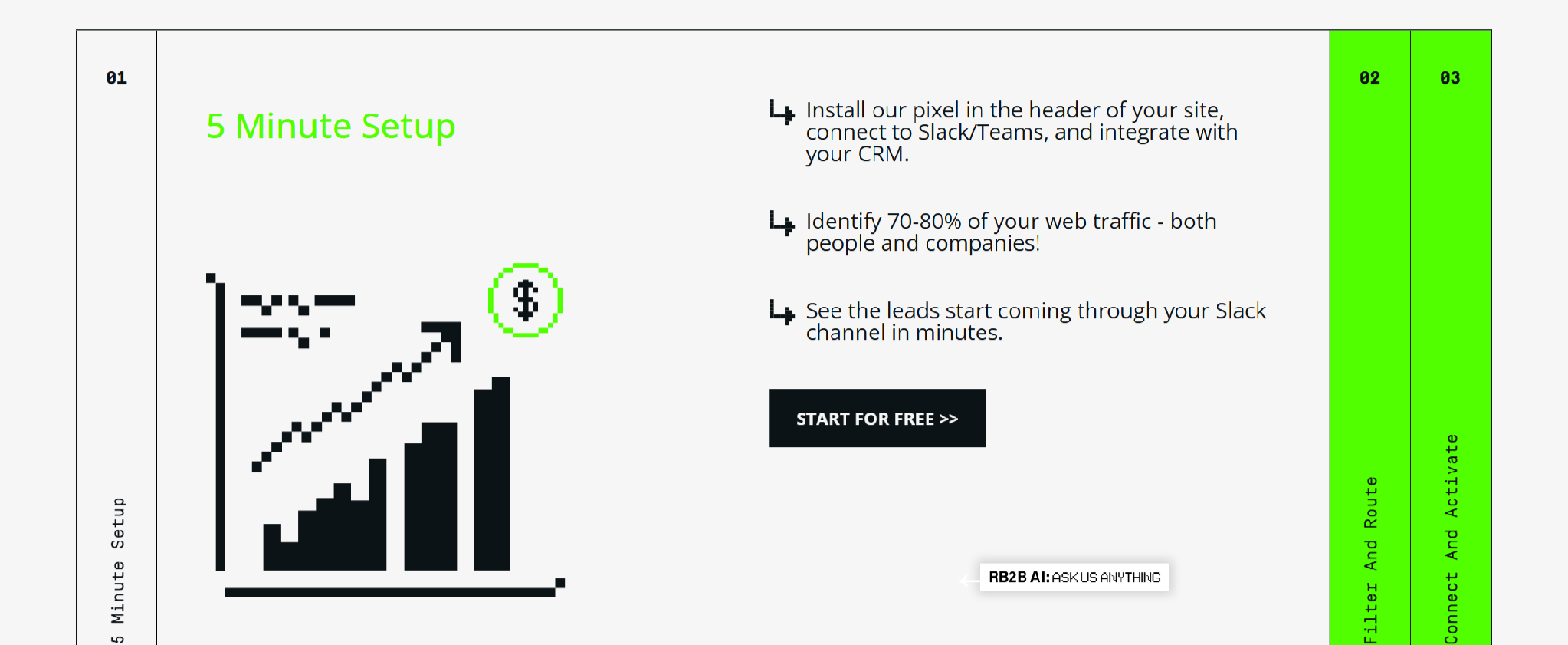
Visitor identification changes the math. Instead of waiting for a form, you identify the visitor. RB2B places a light pixel on your site. It then reveals the real people and companies behind your traffic. RB2B reports 70-80% identification of website traffic (RB2B).
You get names, LinkedIn profiles, and work emails. Your sales team can act on real buyers today. RB2B's traffic insights show who visits and what they view.
Picture a VP of sales reading your pricing page. They leave without booking a call. With identification, your rep sees that visit today. A quick, relevant message can restart the deal.
This is conversion optimization for the silent majority. You stop losing the visitors' forms that are never captured.
RB2B focuses on US-based traffic, which keeps this practical and compliant. You spend effort where your buyers actually convert. Anonymous no longer means unreachable.
Outcome: you recover the pipeline hidden inside anonymous traffic.
Identifying a visitor is step one. Acting fast is where the pipeline gets made. Intent fades quickly, so speed matters.
Watch for high-intent behavior on your site. A visit to pricing means more than a blog view. RB2B's Hot Pages flags visits to your key pages. Its Hot Leads feature tags visitors who match your ICP.
Then route each signal to the right action:
RB2B connects to over 50 apps for this routing (RB2B). You can trigger workflows the moment intent appears. Fast follow-up beats a perfect message sent too late.
Minutes matter with fresh intent. A fast, human note beats a slow, polished one. Reach out while your brand stays top of mind.
Set clear rules for what counts as hot. Not every visit deserves a sales call. Reserve fast outreach for real buying intent.
Outcome: you reach buyers while their interest runs high.
More leads are not always better. Sales teams ignore lists full of poor fits. Qualification protects their time and your pipeline.
Score leads on fit and intent, not just activity. A director at a target account outranks a random signup. Build a simple model your team trusts:
RB2B lets you filter visitors by revenue, size, seniority, and department (RB2B). You route only real prospects to sales. RB2B's sales prospecting software keeps your reps focused on buyers.
Good qualification fixes the marketing-sales disconnect. Sales trusts the pipeline, and follow-up improves.
Revisit your scoring model every quarter. Buyer behavior shifts, and so should your filters. Stale rules send sales the wrong names.
Keep your model easy to explain. Reps should know why a lead scored high. Trust grows when the logic stays clear.
Outcome: sales gets fewer leads, but far better ones.
Optimization is never one and done. The best B2B teams test and learn forever. But they test against revenue, not clicks.
Run experiments with a clear pipeline goal. Change one thing, measure the result, and keep what works:
Give each test enough traffic and time. B2B volumes are lower, so patience matters. A quick click lift can still hurt the pipeline.
Close the loop with your sales team. Ask which leads became opportunities and deals. Feed that insight into your next test. Over time, small gains compound into a major pipeline.
Set a clear win condition before each test. Decide what result would change your mind. Then let the data, not opinions, settle it.
Document every test and its result. A simple log prevents repeated mistakes. Your team learns faster with shared evidence.
Treat a failed test as useful data. It still sharpens your next move. Progress comes from steady, honest iteration.
Outcome: disciplined testing turns learning into steady growth.
A few habits quietly drain your conversions. Watch for these traps as you optimize:
Each mistake looks productive in a dashboard. But none of them builds a real pipeline. Fix these first, and your other efforts compound.
Great optimization needs the right scoreboard. Vanity metrics feel good but mislead you. Revenue metrics tell the truth.
Track the numbers that connect to the pipeline:
Watch one RB2B customer example. An SDR called 100 enriched visitors in a single week. Prioritizing their ICP, the team booked 11 demos (RB2B). That is conversion optimization measured in pipeline, not page views.
Build one simple pipeline dashboard. Show source, stage, and value in a single view. A shared scoreboard keeps everyone honest.
Review these metrics monthly with sales and marketing. Shared numbers end the finger-pointing. They keep both teams focused on revenue.
B2B conversion rate optimization is bigger than a form. It spans traffic, messaging, pages, and sales handoff. Most of all, it respects the buyer's real journey.
The biggest opportunity hides in plain sight. Most of your visitors never convert through a form. Identify them, qualify them, and act on their intent. That is how you turn pageviews into pipeline.
Start with one strategy from this guide. Then layer in visitor identification to recover lost demand. You can see how RB2B works with a quick demo.
It varies by industry, traffic source, and offer. Many B2B sites convert in the low single digits. But the raw rate matters less than pipeline quality. A lower rate with better-fit buyers can beat a higher one. Focus on qualified opportunities, not just percentages.
B2B buying cycles are long and involve many people. One visit rarely leads to a purchase. So B2B optimization targets the pipeline across many touches. B2C often optimizes for a fast, single purchase.
Yes, with visitor identification tools. RB2B identifies the people and companies behind anonymous traffic (RB2B). You can then follow up before a form is ever filled. This recovers the pipeline that traditional CROs miss.
Track pipeline value, qualified opportunities, and demos booked. Add signal-to-opportunity and revenue from web sources. These reveal real impact. Form-fill counts alone can mislead you.
Alert your reps, start automated outreach, and add to lead score in under five minutes.

