Intent data providers identify companies actively researching products or solutions by tracking signals such as content consumption, search behavior, and website visits. They turn these signals into actionable data that helps B2B teams prioritize in-market accounts and reach buyers at the right time.
Quick summary
B2B sales teams often waste time chasing prospects who aren't ready to buy, while missing those actively researching solutions. Intent data solves this problem by revealing buyer behavior, identifying in-market accounts, and prioritizing high-value leads. By combining first-party and third-party signals, teams can personalize outreach, improve conversions, and accelerate sales cycles.
My story with intent data
I first heard about intent data in 2015, when I ran a SaaS company called Robly. We were looking for any edge in outbound sales, and someone mentioned Bombora. The pitch was straightforward. If you could see which companies were researching email marketing software, you'd call them before your competitors even knew they were in-market.
We tried it, and the results were mixed. The data was at the company level, so we knew "Acme Corp" was reading about email marketing. But we had no idea who at Acme Corp was doing the reading. Our SDRs would call into the account and get bounced around. The signal was real, but the last mile, getting to the actual person, was missing.
That experience stuck with me. When I started RB2B, person-level identification was the whole thesis. Intent data is powerful, but only when you can connect the signal to a specific human being you can actually reach. In this guide, I’ll explain intent data, its importance, types, and cost in detail. I’ll also share the 15 best B2B intent data providers, including their strengths, weaknesses, and use cases.
What is intent data & why does it matter?
Intent data is the digital trail potential buyers leave behind as they search for solutions, explore competitors, and engage with content. It captures behaviors like keyword searches, website visits, content downloads, and product comparisons, offering a dynamic view of buyer activity.
Why is it a game-changer?
Prioritize high-value leads: Instead of sifting through countless prospects, intent data pinpoints those actively signaling interest, so your team can focus on opportunities that matter.
Personalizing outreach: By understanding what buyers are researching, you can craft outreach emails that directly address their specific needs and interests, ensuring your communication resonates with their current priorities and challenges.
Accelerating the sales cycle: Engaging at the right moment when prospects are most likely to act shortens the path to conversion, driving faster results.
Here’s a quick comparison of the three data types and the different ways they can boost your sales outreach strategy:
Type of Intent
Data Source
Collection Method
Best Use Cases
First-party
Your platforms (e.g., website, CRM, email campaigns)
Analytics tools
Marketing automation
CRM tracking
Converting warm leads, personalizing messaging
Reengaging past visitors
Second-party / Downstream
Partner platforms or cooperative agreements
Data-sharing agreements
Platform integrations
Expanding audience reach
Uncovering industry trends
Discovering mutual prospects
Third-party
Aggregated from external sources like industry sites, ad networks, or intent data providers
Tracking cookies
IP matching
Content engagement analysis
Identifying early-stage buyers
Uncovering broad market opportunities
Informing proactive outreach
How much does intent data cost?
In 2026, B2B intent data pricing ranges from free basic tools to enterprise platforms costing over $100,000 annually. For instance, ZoomInfo can cost a median $33,500/year (range $7,233 to $156,053), and intent charges are extra. 6sense can cost a median $62,220/year (range $11,234 to $176,511). But most premium third-party intent data providers use quote-based pricing, annual contracts, usage credits, and tiered subscriptions.
First-party intent data doesn't cost nearly as much. RB2B starts at free and scales up to $199 per month, so even the top tier puts annual spend under $2,400. That's a fraction of the third-party providers. Also, it's more actionable because the data comes from people who've already shown up at your door.
For teams with smaller budgets, the first-party route is the better starting point. You get a signal you can act on today, from visitors who already know you exist, without a five-figure annual contract.
Person-level vs. account-level intent data
Most intent data providers work at the account level. They'll tell you that a company is researching your product category. But they can't tell you which person at that company is doing the research. Your reps still have to figure out who to call and whether they've reached the person who triggered the signal.
Person-level intent data closes that gap. Instead of "this company is interested," you get "this specific person visited your pricing page twice this week." That changes the workflow entirely. Your rep isn't cold-calling a switchboard or guessing at org charts. They're reaching out to someone who already raised their hand.
The practical difference is speed. A Forrester study found that B2B buying committees now average 13 people. Account-level data tells you the company's in-market, but you've still got to find the right 1 or 2 out of 13. Person-level data skips that step. RB2B's person-level visitor identification does this for US-based traffic. It pushes the visitor's identity into Slack, HubSpot, or Salesforce so a rep can follow up in minutes.
The trade-off is coverage. Person-level identification depends on matching cookies and device data to verified identities, so it works best with US visitors. Account-level providers cast a wider net globally. For most B2B teams, it's best to use both, but lean heaviest on the type that closes deals for you.
First-party vs. third-party intent data: which do you need?
First-party intent data comes from your own properties, your website, your product, and your emails. When someone visits your pricing page, downloads a whitepaper, or opens three emails in a week, that's first-party data. You own it, you control it, and it's about people who've already found you.
Third-party intent data comes from external sources like publisher co-ops, B2B content networks, review sites, and data exchanges. It'll show you research activity happening outside your ecosystem. You're seeing accounts that are in-market for your category even if they've never heard of you.
They've got different strengths. First-party data is higher-intent because these people already found you, but it's limited to your existing traffic. Third-party data is broader and covers accounts you'd never see otherwise, but it's noisier. A third-party signal might mean someone at that account read a generic industry article, not that they're evaluating your product.
Most mature go-to-market teams use both. Third-party data fills the top of the funnel by surfacing accounts worth pursuing. First-party data, especially person-level identification, tells you which of those accounts actually showed up and who came to look. If you're just starting with intent data, first-party is the faster win. The signal-to-noise ratio is better, and it is simpler to implement.
The 15 best B2B intent data providers
Here are the 15 intent data providers worth evaluating in 2026, organized by data type and who they're built for:
Tool
Pricing (Starting)
Best For
Key Differentiator
Database / Accuracy
RB2B
Free; Pro+ $199/mo
Identify website visitors at the person level to uncover real buying intent.
Identifies individuals (not just companies) visiting your site
70–80% U.S. person-level ID; global company-level ID
Bombora
Free trial; Custom
Account-level intent data, B2B targeting
Company Surge® Analytics for identifying spikes in buyer intent
Covers hundreds of B2B topics; regular data updates
6sense
Free plan; Custom
Predictive analytics and ABM
AI-driven predictive insights and account orchestration
Dynamic segment updates based on real-time behavior
ZoomInfo
Custom
Enterprise all-in-one sales OS
Advanced intent and conversation intelligence
220M+ validated contacts; wide coverage
Demandbase
Custom
ABM-focused targeting and engagement
Unifies first- and third-party data for comprehensive insights
High-quality ABM data; AI-driven prioritization
TrustRadius
Starting at $30k/yr
Peer-validated reviews + intent leads
Intent-Driven Leads using downstream intent data
Uses review data for better targeting
G2
Custom
User reviews + intent signals
Tracks engagement with reviews and category reports
~1M reviews, extensive buyer data
MadKudu
Custom
Predictive lead scoring
Machine learning-powered prioritization
70% revenue from 20% of leads; AI-driven
Leadfeeder
Free; Paid from €79/mo (billed annually)
Website visitor ID and lead gen
Integrates with Google Analytics to identify companies
Company-level insights; real-time alerts
Cognism
Custom
Global data for sales/marketing teams
Phone-verified emails and strong GDPR compliance
High-quality verified data; broad global coverage
Lead Onion
Custom
Multi-source intent data
Aggregates intent data from over 20 sources
Strong B2B database; flexible pricing
IntentData.io
Custom
Contact-level intent data
Offers detailed individual-level buyer signals
Real-time insights; precise targeting
UpLead
Starting at $99/mo
Verified contact data for prospecting
Real-time email verification during search
High accuracy; strong search filters
Seamless.AI
Custom
Real-time contact data for outreach
AI-driven search and lead enrichment tools
High accuracy; advanced filtering
Artisan
Custom
AI-powered outbound automation
Automates research, enrichment, and outreach
250M+ verified contacts; multi-channel
1. RB2B
RB2B is a website visitor identification platform that works at both the person and company levels. We built the product around one question. If someone is on your website right now, you should know who they are, not just which company they work for.
The platform’s person-level identification uses a proprietary data asset to match US-based website visitors to verified identities. It provides detailed profiles of visitors, including names, job titles, emails, LinkedIn profiles, and the specific pages they've interacted with.
Next, it pushes that information into Slack, Teams, HubSpot, Salesforce, or any of its 15+ integrations through Zapier. This granular approach allows sales teams to engage with prospects at the exact moment of interest, enhancing the relevance and effectiveness of outreach efforts.
Hot Pages lets you tag your highest-intent pages, so your team gets alerted the moment a qualified visitor lands on one. Hot Leads layers ICP-based filtering on top, so you're not drowning in every visitor. RB2B also incorporates Demandbase-powered company-level identification. So, you get the same account-resolution quality as a standalone Demandbase contract, bundled with the person-level layer that Demandbase doesn't offer on its own.
Key features
Person-Level Visitor Identification: Capture detailed profiles of individual visitors, including name, job title, email, LinkedIn profile, and pageview history
Hot Leads: Prioritize high-value visitors who show strong buying intent for faster and more focused outreach
Hot Pages: Identify and track the website pages that attract the most engaged prospects to understand what drives interest and conversions
Real-Time Alerts: Receive instant notifications via Slack, Teams, or CRM integrations when qualified leads visit your site
CRM & Sales Tool Integrations: Seamlessly integrate with platforms like Salesforce, HubSpot, Apollo, Clay, and Zapier
Traffic Insights: Gain visibility into which pages visitors are engaging with, helping to tailor outreach strategies
AI Support Agent: Access automated assistance to resolve queries and optimize usage
Pro Plan: Starting from $149/month – 600 credits per month
Pro+ Plan: Starting from$199/month – 600 credits per month
Pros
High identification accuracy rates for U.S.-based visitors, offering real-time, actionable insights
Easily integrates with major CRMs and sales tools like Salesforce, HubSpot, and Zapier, streamlining workflows
Receive instant notifications for high-value leads, allowing immediate, targeted outreach
Segment visitors based on company size, geography, and seniority for highly tailored outreach
Quick setup and intuitive design make it easy for teams to get started with minimal training
Cons
Person-level identification is US-only, but company-level identification has global coverage.
2. Bombora
Bombora stands out for its Company Surge® Analytics, a feature that identifies spikes in buyer intent by analyzing content consumption across businesses. Its expansive topic taxonomy, spanning thousands of B2B categories, enables precise targeting and deep audience insights. With robust integration capabilities for platforms like Salesforce and Marketo, it fits seamlessly into established workflows.
Key Features
Intent Data (Company Surge): Shows which companies are researching topics tied to your product or service, revealing those likely in buying mode
B2B Data Co‑op: Data comes from a network of thousands of trusted B2B publishers and sites, giving broad coverage across many industries
Identity Resolution & Enrichment: Lets you match anonymous site visitors or data records with firmographic profile info to enrich your contact database
Audience and Segmentation Tools: Lets you build custom B2B audiences or use prebuilt segments for account‑based marketing and targeted campaigns
Campaign Planning and Measurement: Offers analytics dashboards and tools to measure campaign performance, track market behavior, and monitor engagement
Pricing
Free trial: Available for testing core features
Custom plans: Tailored pricing based on business requirements
Pros
Tracks intent signals across hundreds of B2B topics for accurate targeting
Integrates with major CRM and marketing automation platforms for seamless workflows
Regularly updates data to maintain accuracy
Cons
Has an opaque pricing structure
Focuses on company-level insights rather than person-level data
3. 6sense
6sense combines behavioral, first-party, and third-party signals with predictive models to prioritize accounts and estimate buying stages. Its AI-driven account-based orchestration provides actionable insights that prioritize accounts most likely to convert.
The platform’s dynamic segment creation allows real-time updates based on user behavior, ensuring sales and marketing teams stay aligned. But update frequency varies by signal type. With robust integrations for tools like HubSpot and Salesforce, it enhances workflow efficiency across teams.
Key Features
Intent Data & Buyer Signals: Provides intent signals about companies actively researching topics related to your offering
Account Identification: Matches anonymous website visitors or behavior data to company accounts
Predictive Modeling and Intent Scoring: Uses AI to score and prioritize accounts based on likelihood to convert
Audience Building and Segmentation: Lets you build custom audiences or segments to personalize marketing and sales outreach for contacts and accounts
Multi‑Channel Support and Advertising: Supports ads, email campaigns, retargeting, and cross-channel outreach
Pricing
Free plan: Includes one user and 50 monthly credits, with significant limitations
Custom pricing: Contact the sales team for a tailored quote based on your needs
Pros
AI-driven account prioritization for identifying high-conversion opportunities
Dynamic segment updates to reflect real-time buyer behavior
Advanced analytics offering deep visibility into buyer intent
Cons
Lack of transparency in pricing
Limited features in the free plan
4. ZoomInfo
ZoomInfo is widely regarded as a leading platform for B2B intelligence, with an extensive database of over 220 million validated contacts. It offers advanced intent data capabilities, making it a popular choice for go-to-market strategies.
Key Features
Contact & Company Database: Provides verified business emails, phone numbers, and detailed company info
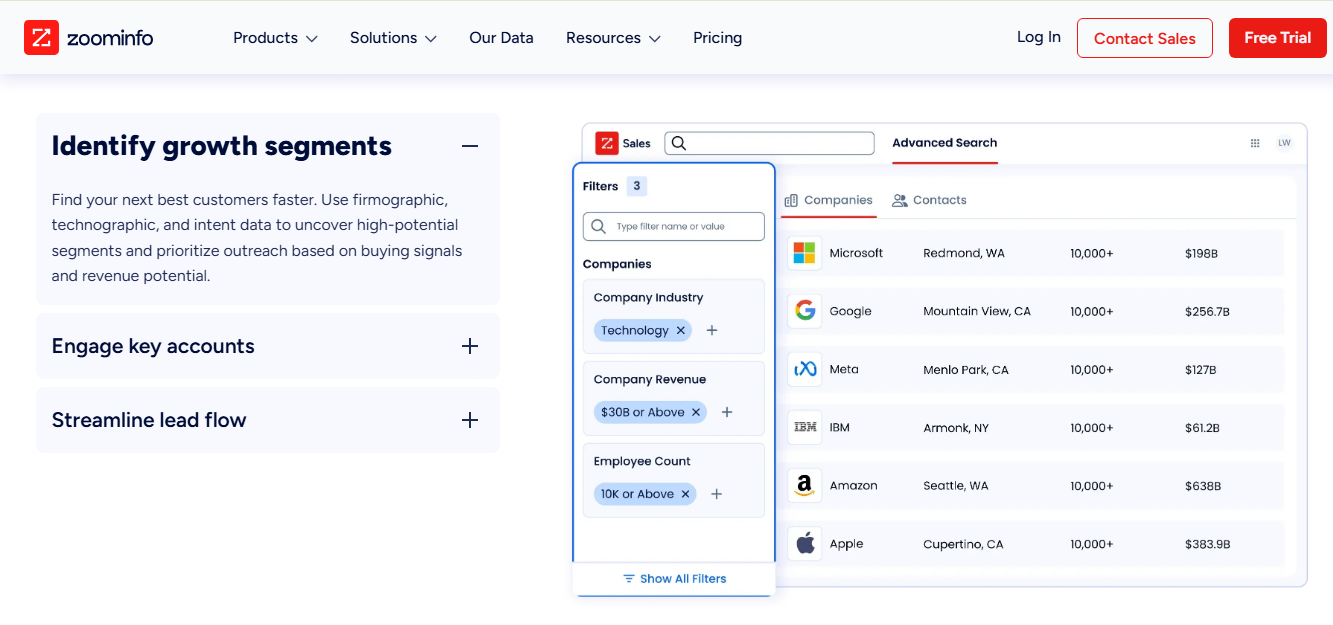
Advanced Search and Filtering: Lets you filter by industry, job title, company size, location, revenue, and more
AI‑powered Data Enrichment and Verification: Uses a mix of automated machine learning and human review to verify and update contact and company data
Intent Data & Buying Signals: Surfaces insights about companies exhibiting buying intent, helping sales teams spot prospects likely to engage or convert soon
CRM and Workflow Integrations: Works with CRM and marketing platforms for smooth data flows
Conversation Intelligence & Outreach Tools: Provides tools that log, transcribe, or track outreach efforts
Pricing
Free trial: Offers a limited exploration of the platform before purchasing
Custom plans: Tailored quotes based on selected features, number of users, and data consumption
Pros
Extensive database enables wider access
Advanced filters to simplify lead targeting
Integration with CRM and marketing software
Cons
Steep pricing, especially for smaller teams
Lack of pricing data
5. Demandbase
Demandbase excels at account-based marketing (ABM), offering a comprehensive platform that unifies first- and third-party data to provide a holistic view of target accounts. Its AI-driven engine identifies and prioritizes high-value accounts, ensuring marketing efforts focus on the most promising leads.
Key Features
Account‑Based Marketing Foundation: Combines first‑party data with third‑party firmographic and intent data to give a full view of target accounts
Intent Data and Buyer Signals: Detects which companies are actively researching topics tied to your offering
Account Scoring and Prioritization: Uses AI to score accounts by fit and buying readiness so teams can focus outreach on high‑potential targets
Account‑Based Analytics and Reporting: Tracks account engagement and shows journey metrics
Cross-Channel Coordination: Enables connected campaigns across ads, emails, website messages, and sales outreach
Pricing
Platform fee: Covers essential software and services
User fee: Flat fee per user, providing scalability for enterprise teams
Pros
Offers combined first- and third-party data for comprehensive insights
Delivers AI-driven account prioritization for targeted engagement
Enables seamless multi-channel campaign execution
Cons
Experiences occasional workflow disruptions due to bugs
Limits flexibility in licensing for smaller teams
6. TrustRadius for Vendors
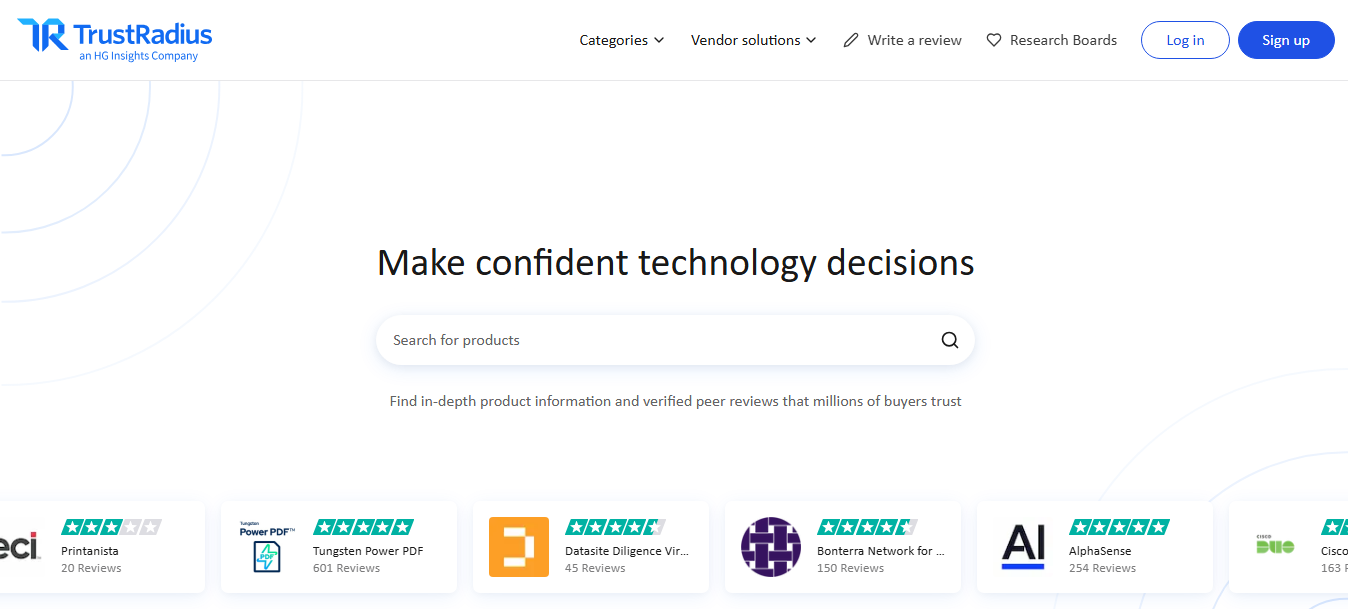
TrustRadius is more than a review platform. It’s a robust, intent-driven lead-generation tool that helps vendors connect with in-market buyers through peer-validated content. Its Intent-Driven Leads Program stands out by leveraging downstream intent data to pinpoint accounts actively researching solutions, including competitors. This lets vendors engage prospects at the right moment in their journey, streamlining lead generation.
Key Features
Verified User Reviews: Ensures every review comes from real users whose identity is vetted before publication
Unbiased Content Sourcing: Displays whether reviews are vendor‑invited or independent, helping readers understand potential bias
Buyer Intelligence and Intent Data: Shows intent signals from companies actively researching your solution
Comparison of Multiple Products: Allows buyers to compare similar software across categories with side‑by‑side reviews and insights
Support for Vendors: Helps vendors claim product pages, collect reviews, share testimonials, and attract potential buyers
Pricing
TrustRadius offers packages like the Customer Voice Package, starting at $30k/product/year, covering brand awareness, traffic boosts, and sales enablement. Pricing for additional options, such as Category Intent Data and Intent-Driven Leads, is available upon request.
Pros
Leverages downstream intent data for high-quality, sales-ready leads
Automates nurture campaigns to save time and resources
Easy product comparison across categories
Cons
Fake or low-quality reviews may slip through
Delays in review publication or payout issues
7. G2
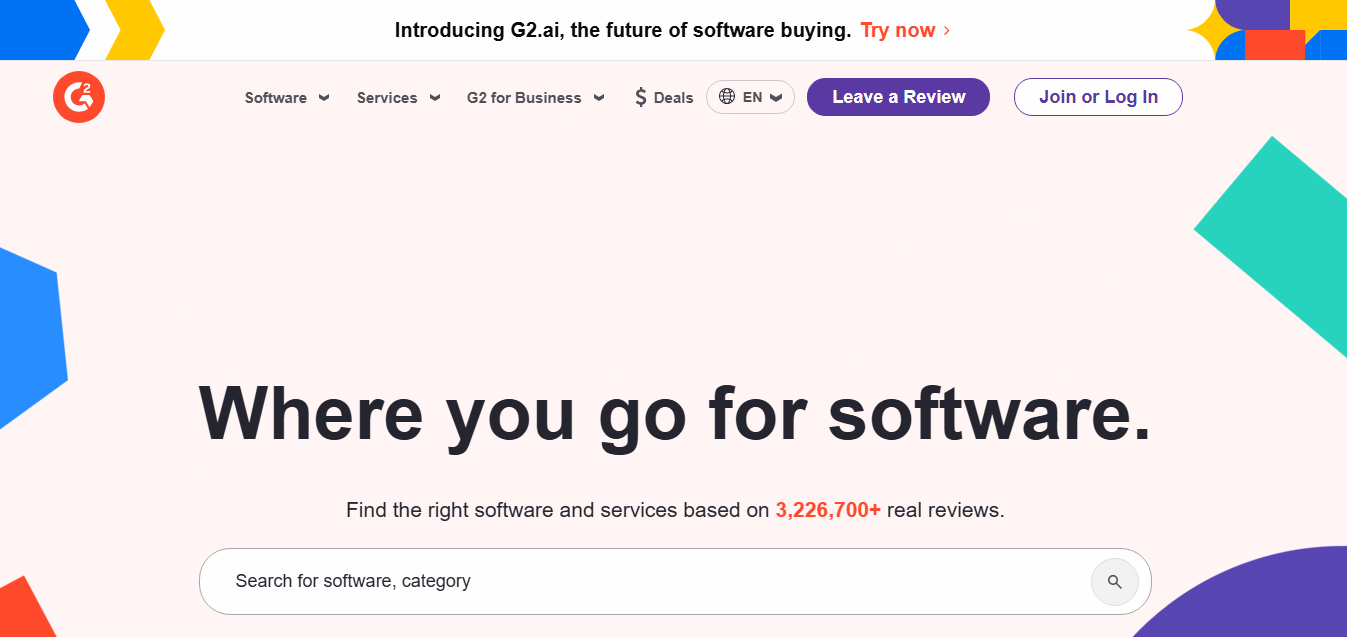
G2 is a well-known platform for authentic user reviews and insights, but it’s also a powerful tool for leveraging intent data. It provides second-party buyer intent data based on engagement with its review platform, including product and category page views, competitor comparisons, pricing-page activity, and reviews. These signals help identify businesses actively researching solutions.
Key Features
Buyer Behavior Analytics: Tracks which products and categories buyers explore, offering clear indicators of intent
Review-Based Insights: Uses peer-validated feedback to help identify trends and preferences within target audiences
Category Intent Reports: Highlights buyer engagement with competitive products and content
CRM and Marketing Tools Integration: Seamlessly integrates intent data with platforms like Salesforce, HubSpot, and Marketo
Account-Based Marketing (ABM) and Segmentation: Uses intent data combined with firmographic filters to build targeted account lists
Pricing
G2’s pricing is custom and depends on the selected features and the number of products. While the flexibility helps with scaling, the lack of transparency can feel underwhelming.
Pros
Tracks buyer engagement with intent signals
Leverages peer-validated reviews to build trust and influence
Enables targeted insights into buyer preferences
Cons
Offers limited features for businesses seeking broader capabilities
It is expensive for businesses with limited marketing budgets
8. MadKudu
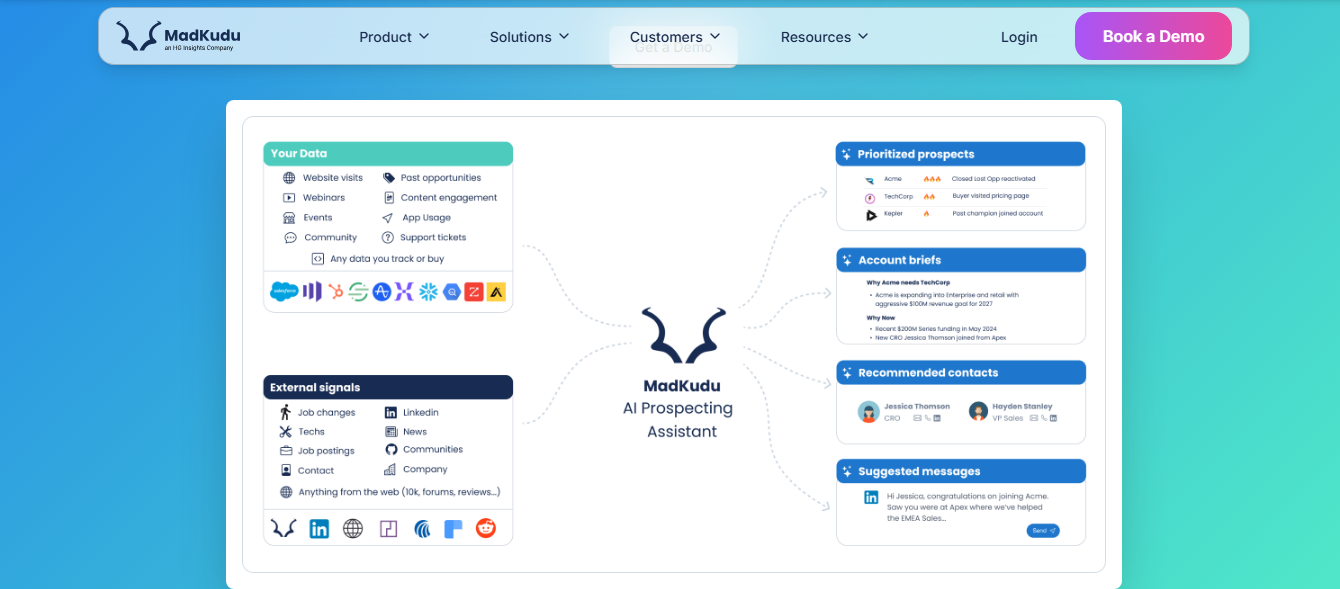
MadKudu is a predictive analytics platform focused on lead scoring and qualification for sales teams. By leveraging machine learning and analyzing historical data, MadKudu predicts which leads are most likely to convert, helping businesses prioritize high-intent opportunities. It’s a powerful tool for teams seeking to focus on leads that are not just interested but highly likely to close.
Key Features
Predictive Lead Scoring: MadKudu uses machine learning to predict which leads are most likely to convert, enabling more efficient lead prioritization
Customizable Scoring Models: You can tailor scoring models based on your company’s unique data and needs, ensuring that the platform fits seamlessly into your workflow
Real-Time Analytics: Provides up-to-the-minute insights into lead behavior, helping your team react quickly to changing engagement signals
Segmentation: Organizes leads into segments based on their likelihood to convert, enabling highly targeted outreach
CRM Integration: MadKudu integrates with CRMs like Salesforce, allowing teams to use lead scoring data directly in their sales process
Pricing
MadKudu does not provide public pricing on its website. Potential users are encouraged to reach out to MadKudu directly for customized pricing based on their business needs and scale.
Pros
Provides accurate lead predictions
Easily integrates with existing systems like Salesforce and other CRM platforms
Helps teams focus on high-value leads, improving targeting and conversion rates
Cons
It can be challenging to set up for non-technical teams
Effectiveness is dependent on the volume and quality of existing data, which could limit its utility for smaller datasets
9. Leadfeeder
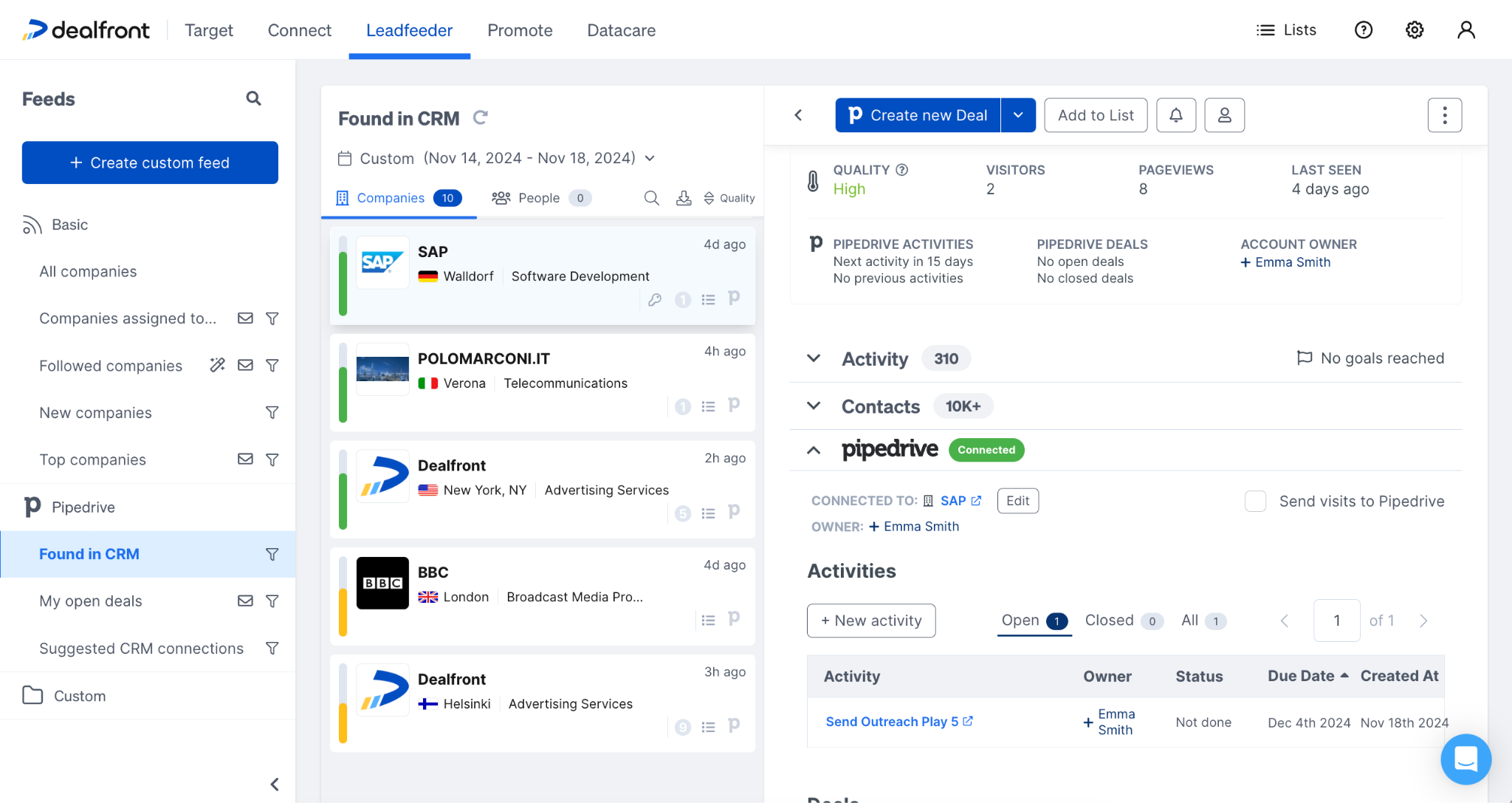
Leadfeeder is a B2B lead generation platform that identifies companies visiting your website through Google Analytics. It tracks company-level data and visitor behavior, showing which pages each company viewed to reveal real buying intent. This helps teams understand which businesses show interest in their content and offerings.
With CRM integrations like Salesforce, HubSpot, and Pipedrive, Leadfeeder streamlines workflows and helps sales teams focus on high-value prospects, making lead generation more precise and effective.
Key Features
Website Visitor Identification: Identifies which companies are visiting your website and what pages they engage with
CRM Integrations: Easily integrates with top CRMs like Salesforce, HubSpot, and Pipedrive to manage leads effectively
Custom Feeds and Filters: Create customized feeds and filters to segment leads based on specific criteria
Real-Time Alerts: Instant notifications when high-value companies visit your website, allowing for quick follow-up
Google Analytics Integration: Combines Google Analytics insights with visitor data, enhancing the depth of information available
Pricing
Free Plan: Up to 100 identified companies with data from the last 7 days
Paid Plans: Starting at €79/month, with pricing based on the number of companies identified and the additional features required
Pros
Users appreciate the intuitive interface and quick setup
Strong CRM and marketing tool integrations enhance workflow efficiency
Provides timely data on website visitors, allowing for prompt and relevant follow-ups
Cons
Some users report fewer companies identified compared to other platforms
The platform's cost may be prohibitive for small businesses or teams with limited budgets
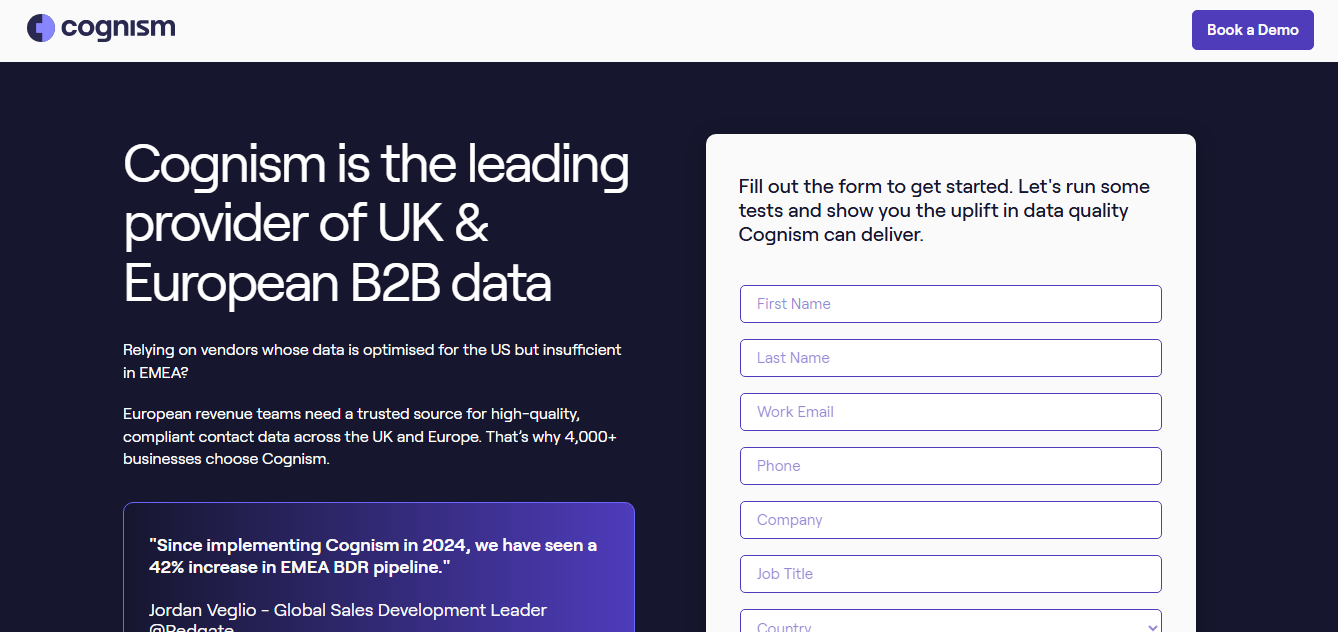
10. Cognism
Cognism is a B2B data platform that provides B2B intent data using Bombora Company Surge as its underlying source. This helps sales teams identify companies researching relevant topics and prioritize potential buyers. It offers real-time buyer intent signals to help businesses identify and engage prospects actively researching solutions, improving outreach efficiency.
Key Features
Email & Phone Verification: Provides phone‑verified mobile numbers and verified business emails for accurate outreach
Firmographic & Technographic Data: Delivers company details such as industry, size, location, and technology stack to help qualify prospects
Intent & Trigger Signals: Reveals when companies show buying signals such as job changes, funding events, or increased research activity
CRM and Data‑as‑a‑Service Integration: Allows export or API-based enrichment of contact and company data directly into CRMs or data platforms
Global Coverage and Compliance: Offers broad geographic data reach (EMEA, North America, APAC) while ensuring GDPR/CCPA compliance and DNC list checks
Pricing
Cognism offers custom pricing based on business requirements, user count, and feature needs. Interested parties are to reach out to Cognism directly for a detailed quote tailored to their specific use case and scale.
Pros
Reliable, verified contact data with phone numbers and emails
High-quality GDPR-compliant data for multiple regions
Strong data enrichment to clean up and enrich leads
Cons
Limited data quality outside core regions (mainly Europe)
Export limitations for large datasets or complex queries
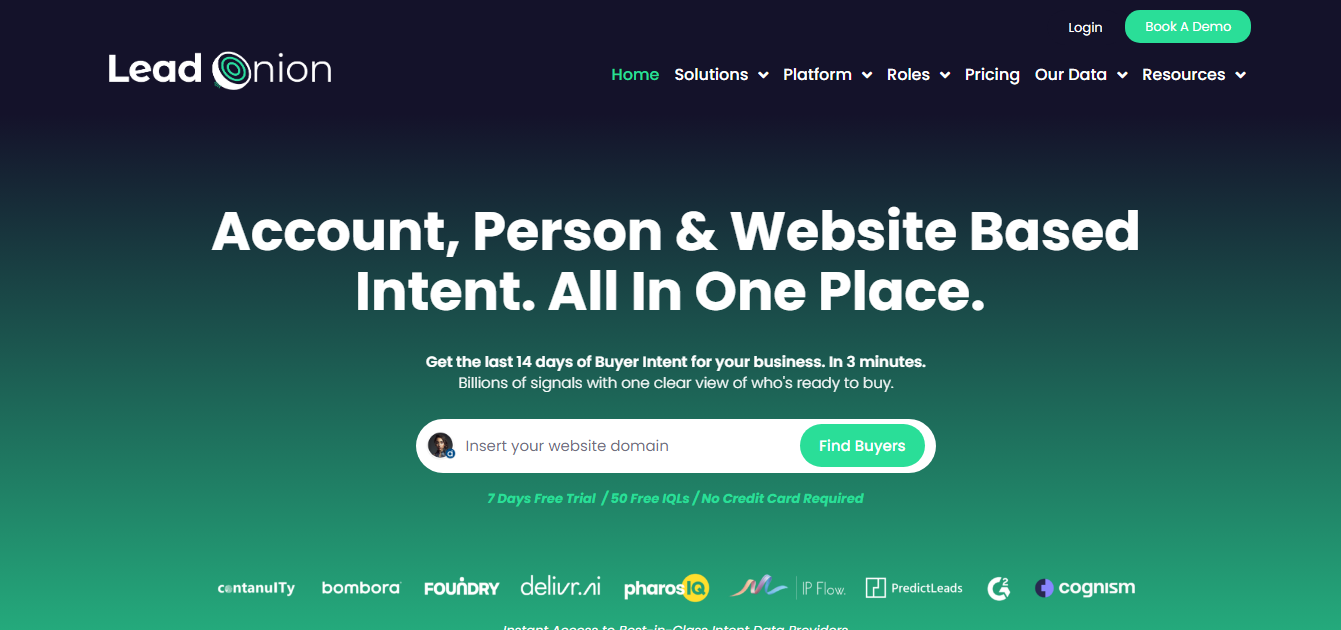
11. Lead Onion
Lead Onion is a B2B intent data platform that helps sales teams identify high-potential leads by analyzing web behavior, firmographic, and technographic signals. The tool provides detailed contact-level information, allowing businesses to engage decision-makers early and target prospects actively researching their solutions.
Intent Data Aggregation: Gathers first‑party, second‑party, and third‑party signals from over 20 sources to capture buyer activity
Account and Contact Signals: Provides intent data on companies, individual contacts, and anonymous website visitors
Verified Contact Database: Offers millions of verified contacts, including emails and mobile numbers for outreach
AI‑Driven Lead Prioritization: Uses AI to analyze intent signals and highlight high‑potential leads
Lead Enrichment and Outreach: Supports enrichment of leads and automated outreach based on intent data insights
Pricing
Lead Onion offers custom pricing. You can also request a demo.
Pros
Multi-source intent data from over 20 platforms
Verified contact details for direct outreach
Allows segmentation by account, contact, and behavior
Cons
Some data or signals may be outdated or inaccurate, limiting reliability in certain cases
Setup and onboarding can require time and effort
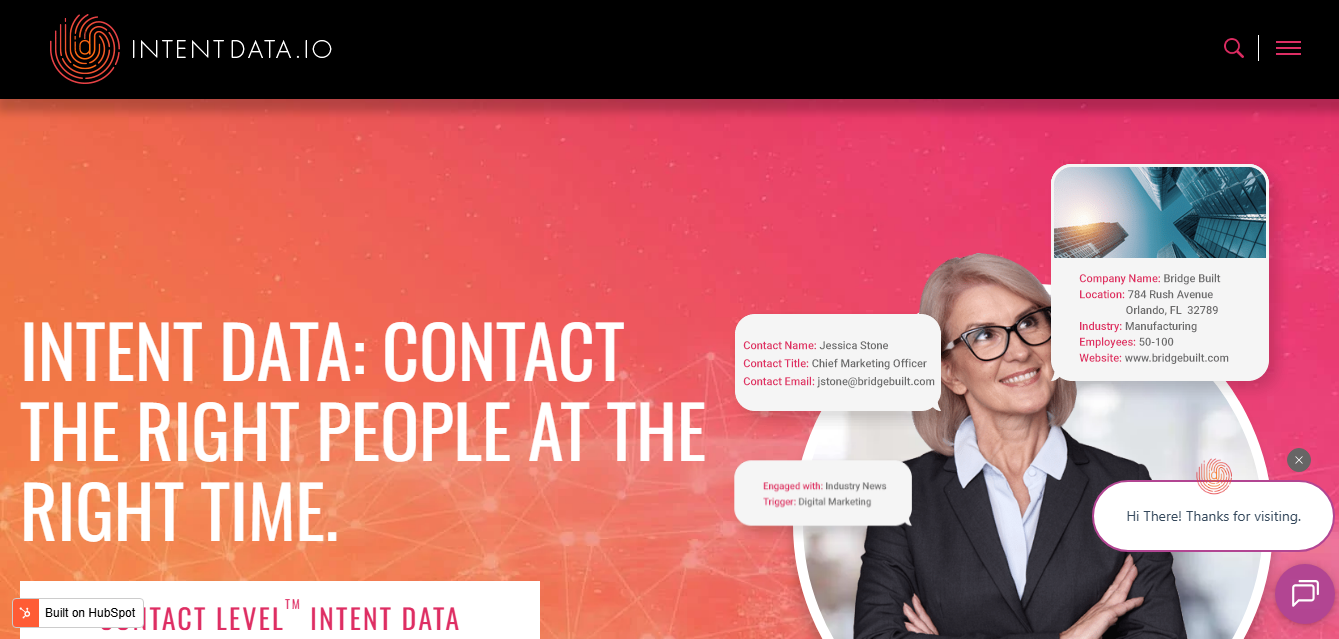
12. IntentData.io
IntentData.io captures and analyzes online behavior to deliver real-time B2B buyer intent data. By monitoring content interactions and search activity, it helps sales teams identify prospects actively researching solutions like yours, enabling more timely, personalized outreach that increases engagement and conversion opportunities.
Key Features
Contact‑Level Intent Data: Delivers direct contact details for individuals showing purchase‑research behavior, not just generic company‑level indicators
Real‑Time Buyer Signals: Monitors content interactions, searches, and online behavior to spot prospects actively looking for solutions
CRM Integration and Data Export: Lets you push intent data and contact info into CRMs or workflows for timely outreach
Customizable Filters: Lets you target prospects by industry, behavior, or demographics to tailor outreach to relevant potential buyers
GDPR–Compliant Data Handling: Provides intent and contact data in compliance with data protection laws for safe and responsible use
Pricing
Intent Data offers three pricing tiers: SMB, Pro, and Enterprise. Pricing is custom and depends on the number of users, data volume, and required features.
Pros
Real‑time signals to alert when prospects are actively researching relevant topics
Custom filters and segmentation for more precise targeting
CRM integration to feed intent‑qualified leads directly into existing workflows
Cons
Effectiveness can be weaker for traditional industries or small‑deal segments
Requires active follow-up and proper process to convert signals into results
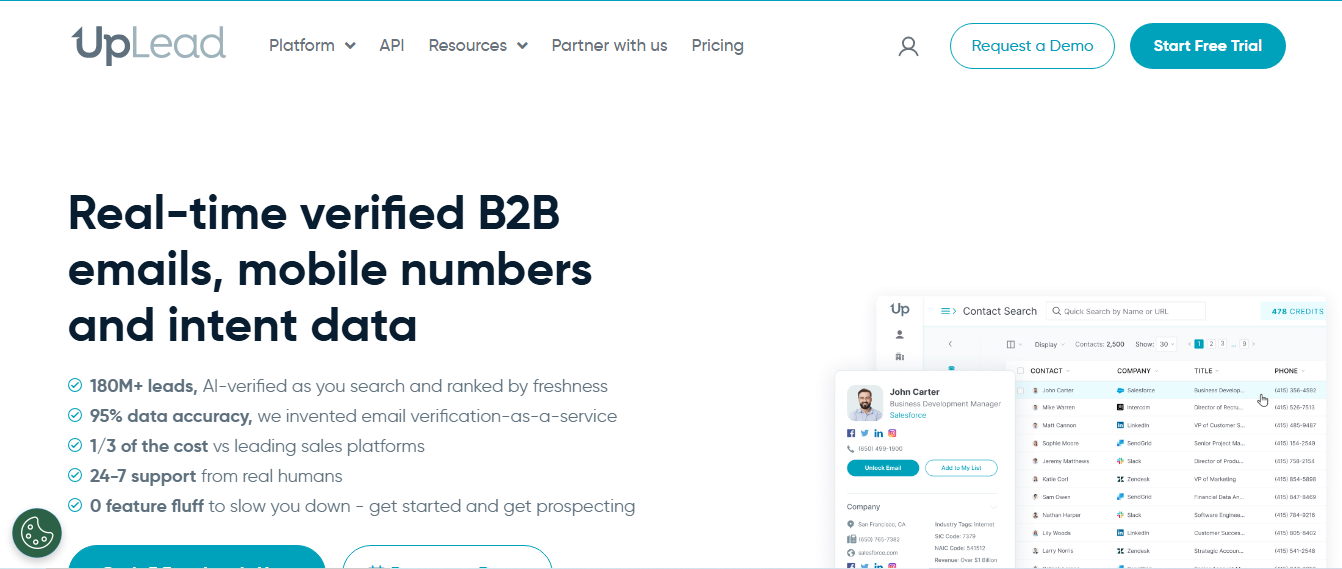
13. UpLead
UpLead is primarily a sales intelligence and prospecting platform offering contact data and lead generation. Buyer intent data is available with its Professional tier, helping users prioritize prospects based on buying signals. UpLead delivers a large database of verified B2B contacts and companies with real‑time email checks to sales and marketing teams so they can effectively find and reach qualified prospects.
Key Features
Verified B2B Contacts: Provides real‑time verified emails, mobile numbers, and firmographic data from a global database of 180 million+ contacts
Advanced Search & Filtering: Lets you apply over 50 filters, including job title, industry, location, company size, revenue, and technographics, to build highly targeted prospect lists
Real‑Time Email Verification: Checks email validity instantly before export to reduce bounce rates and improve deliverability
Data Enrichment & CRM Sync: Allows you to enrich existing contact lists or CRM data with up to 50+ data points and sync results with tools like Salesforce, HubSpot, or Zoho
Chrome Extension & API Access: Lets you pull contact details directly while browsing LinkedIn or company websites and supports API access for custom workflows
Pricing
UpLead offers a tiered pricing plan:
Free Trial: $0 for 7 days, giving 5 credits (enough to unlock 5 contacts)
Essentials: $99/month for 170 credits (single‑user). Includes verified emails and phone numbers, plus CRM export
Plus: $199/month for 400 credits (single‑user). Adds data enrichment, technographic data, advanced search filters, and suppression lists
Professional/Team: Custom pricing (contact sales). Includes buyer intent data, full search filters, API access, team‑management capabilities, and more
Pros
Reliable verified contact data (emails and phones) for outreach
Real‑time email verification for reduced bounce risk
Over 50 search filters for precise targeting
Cons
Data coverage in smaller or niche markets can be weaker or less complete
No built‑in multichannel outreach or automation
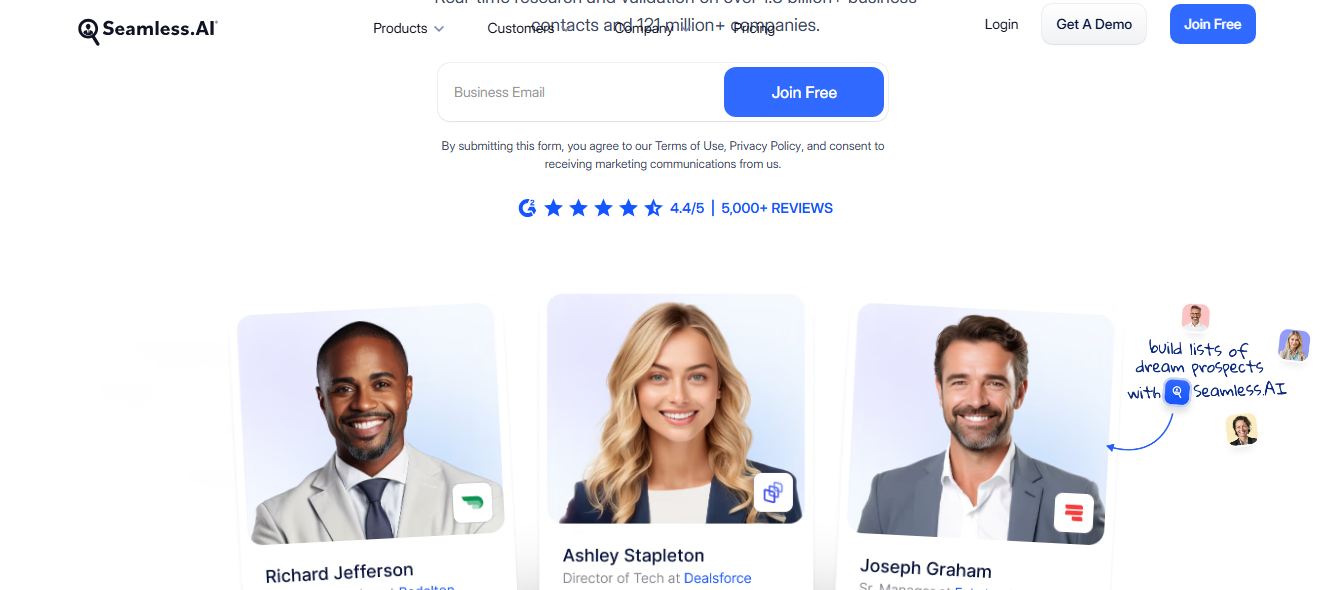
14. Seamless.AI
Seamless.AI helps sales teams find up‑to‑date B2B contact information and company data in real time. It focuses on prospecting and contact discovery, with Buyer Intent Data available as an add-on. The platform offers verified emails, phone numbers, and company details so businesses can build accurate lead lists. It also tracks buyer intent and recent job changes, so you catch prospects when are ready to engage.
Key Features
Real‑Time Contact Search: Provides up‑to‑date B2B emails, phone numbers, and company info by scanning public and private databases in real time
Data Enrichment: Updates incomplete contact or company records to full profiles, helping clean and expand CRM or lead lists automatically
Bulk List Building & Filters: Lets you apply over 100 filters (company size, job title, industry, etc.) for targeted prospect lists, and build large contact lists quickly
Job‑Change Tracking & Buyer Intent Signals: Detects job changes and buyer behavior to highlight contacts or companies that may be ready to buy
CRM & Tool Integrations Plus Browser Extension: Syncs data with major CRMs and lets you grab contact info directly from company websites and platforms via a browser extension
Pricing
Seamless.AI offers three pricing tiers: Free, Pro, and Enterprise. Pricing is custom and depends on the number of users, data volume, and required features.
Pros
Built‑in data enrichment, updating, and strengthening contact records
Buyer intent signals and job‑change alerts for timely insight on active prospects
Chrome extension and CRM integrations for easy workflow and contact export
Cons
Contact data accuracy can be inconsistent (especially phone numbers)
Data coverage is weaker for some regions outside the main markets
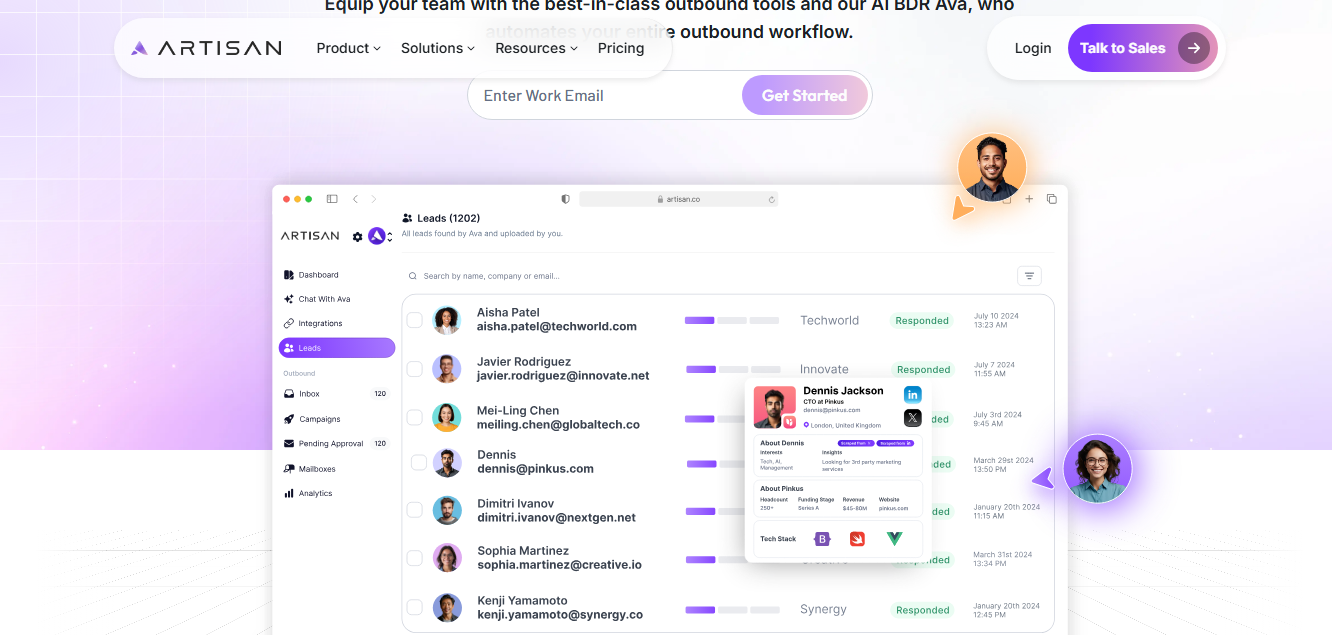
15. Artisan
Artisan offers a B2B sales platform that combines a vast contact database with intent data and outreach automation. The tool gives access to millions of verified leads and monitors buying signals such as job changes and online activity. Its built-in AI BDR automatically researches leads and sends LinkedIn or email outreach.
Key Features
AI‑Driven Outbound Sales: Uses an AI BDR (named Ava) to find leads, research them, and send personalized outreach via email and LinkedIn
Large Verified Contact Database: Gives access to numerous B2B contacts across 200+ countries for precise lead targeting
Intent Signal Research: Scrapes web data and tracks triggers (like hiring news or funding events) to surface companies showing buying signals
Multi‑Channel Outreach Automation: Automates entire outreach flows, including email campaigns, LinkedIn messages, follow‑ups, and deliverability checks
Lead Enrichment and Personalization: Enriches lead records with firmographic and behavioral data and crafts hyper‑personalised messages using gathered insights
Pricing
Artisan offers custom pricing based on business requirements and scale. Interested customers are to reach out directly for a personalized quote and more detailed pricing information.
Pros
Over 250 M+ verified B2B contacts for outreach and prospecting
Supports multi‑channel outreach, including email and LinkedIn, from a unified platform
Built‑in deliverability tools, like email warm-up, to improve inbox placement
Cons
Some users report inconsistent lead quality and generic messaging
Steep learning curve, especially when configuring multi‑channel campaigns
How to evaluate intent data providers
Choosing the right intent data provider requires a clear understanding of what sets a platform apart. Here’s what I focus on when deciding the best platform:
Data accuracy and freshness: Reliable insights are non-negotiable. Platforms that validate their data and update it frequently ensure you’re working with actionable information.
Coverage and depth: The best providers offer wide-ranging data that covers multiple industries, locations, and buyer personas, enabling a more targeted approach.
Integration capabilities: Seamless integration with CRMs, marketing automation tools, and analytics platforms is essential to streamline workflows.
Actionable insights: Platforms should do more than deliver raw data; they must provide analytics and insights that help craft tailored, impactful strategies.
How to pick a B2B intent data provider
Here are the factors to look at when picking a B2B intent data provider:
Check the quality of the signals
Look at how the provider collects intent data. Strong providers combine multiple sources, such as website visits, content consumption, buyer research patterns, and verified company activity. Go for signals that match real prospects, not random noise.
Look for verified person-level and company-level data
Many intent providers surface only broad account-level activity, making it hard to pinpoint who is genuinely interested within a company. You need visibility into both the organization and the individual, so your team can engage the right contact early and avoid generic outreach across the entire account.
Confirm integrations with your core tools
A good intent data provider should plug into your CRM, sales engagement tools, and marketing automation platforms without extra steps. Smooth integrations help your team act on signals quickly and keep the entire workflow aligned around one source of truth.
Check for fast signals
Intent is time-sensitive. When signals arrive late, the advantage disappears because competitors reach the prospect first. You want a provider that sends alerts in real time or close to it so your team can act while interest is still high.
Review enrichment depth
Strong enrichment is what turns raw intent activity into clear, actionable insight. Look for providers that fill in missing fields, update outdated records, and give context around each signal so your team can prioritize the right accounts.
Look at privacy and data sources
A reliable provider should be transparent about how it collects data and ensure all sources follow compliant, ethical practices. Clear sourcing protects your brand and reduces the risk of outreach that feels intrusive.
Find the right intent data provider for your pipeline
The intent data market has matured fast, but the core question hasn't changed. Are you reaching accounts and people who are in-market, or are you guessing? The highest-intent signal you can get is your own website visitors.
Start by identifying the companies or individuals visiting your site, the pages they explore, and the actions they take. RB2B's free plan is one way to get started with person-level visitor identification. It gives you 150 person-level resolutions per month at zero cost.
You'll see who's on your site and which pages they're hitting, and you can push that straight into Slack or your CRM. It's the fastest way to turn traffic you've already got into pipeline you can work. Book a demo to see it in action.
FAQs
What is intent data?
Intent data reveals potential buyers' digital behaviors, such as website visits, content engagement, and product searches. It helps sales and marketing teams understand what prospects are actively interested in, so they can engage at the right moment and improve conversion rates.
How does intent data work?
Intent data providers monitor digital signals that show when a company or person is researching a product category. Those signals include content downloads, search queries, website visits, and activity on review sites. The provider scores the activity and delivers it to your sales tools. Your team uses those scores to focus on accounts already in-market, so reps don't waste time on cold leads.
What types of intent data are available?
Intent data comes in three types: first-party (from your platforms like website and CRM), second-party (from partners and integrations), and third-party (from external sources such as industry sites or data providers). Each type has its strengths depending on your sales strategy.
Who are the top intent data providers?
The leading providers in 2026 include Bombora, 6sense, Demandbase, ZoomInfo, G2, and RB2B. They range from large third-party co-ops to full ABM platforms to person-level visitor identification tools. Which one fits depends on your budget and whether you need account-level or person-level data. See how RB2B compares to Demandbase for a closer look at combining both.
How do I choose the best intent data provider for my business?
Look for an intent data provider that offers accurate, fresh data, integrates seamlessly with your CRM, provides actionable insights, and aligns with your specific business needs. RB2B stands out by delivering both person‑level and company-level insights. This gives you a clear view of who’s actively engaging with your site and what they’re interested in, allowing for timely and targeted outreach.
What integrations do intent data providers offer?
Most top intent data providers, including RB2B, Bombora, and 6sense, offer integrations with popular CRMs (like Salesforce, HubSpot) and sales tools (such as Slack and Apollo). Ensure that your chosen provider integrates well with your existing tech stack to streamline workflows.
How accurate is the data provided by these intent data platforms?
Data accuracy varies between providers. A platform like RB2B offers high accuracy for both person- and company-level identification. So, you know not only which companies are engaging with your site but also the specific individuals within them. With real-time alerts and enriched profiles, RB2B helps you focus on high-value, actionable leads.