
RB2B AI: ASK US ANYTHING
I’ve heard it all before. “Outreach emails don’t work anymore.” But let me be clear. The problem isn’t outreach emails themselves. It’s how they’re written. The days of generic templates and one-size-fits-all pitches are over. People’s inboxes are overflowing, and attention spans are shrinking. A poorly written outreach email won’t just get ignored. It can hurt your credibility.
I’ve learned that the right outreach email isn’t a pitch, but a spark. It’s about showing you understand the recipient, solving a problem they care about, and making it easy for them to take the next step. The difference between a "delete" and a "let’s talk" often comes down to small, intentional details.
In this guide, I’ll break down how to write an outreach email that gets noticed, engages the recipient, and drives action. For those ready to elevate their strategy, I’ll introduce a FREE tool that turns your outreach into a precision-guided system.
The best outreach emails aren’t just words on a screen. They’re a conversation starter, a way to connect. When I first started refining my email outreach strategy, I learned the hard way that skipping over the basics could sink even the best-intentioned campaigns. Each email needs to be purposeful, structured, and, above all, human. Here’s what makes outreach emails stand out:
Bonus read: Curious to explore the basics of outreach? Check out our comprehensive guide on what cold outreach is and how it works.
Crafting a successful sales outreach email is both a skill and a process. Success isn’t about sending more emails but about sending the right ones. My process for writing outreach emails consistently drives engagement and results by prioritizing relevance, value, and timing. Here’s how to write an impactful sales outreach email:

The foundation of any great outreach email is a thorough understanding of your audience. Without knowing who you’re targeting, your message will lack relevance and fail to connect.
Check out the table below for key methods to research your audience and their practical applications:
By focusing on specific roles, industries, or challenges, your outreach becomes less about selling and more about solving a problem. This groundwork ensures your message resonates and feels tailored to your audience, setting the stage for meaningful engagement.
Your subject line is the gatekeeper to your email. It determines whether your message is opened or ignored. A powerful subject line doesn’t just grab attention; it sets the tone for the rest of the conversation. To craft a subject line that works, do the following:
A great subject line is a promise that the content inside will deliver value. Avoid overused phrases like “Exclusive offer!” or “Just checking in,” as they signal spam and lack originality.
A personal email instantly stands out in a crowded inbox. Generic intros are a quick path to the delete button. Personalization goes beyond inserting a name; it’s about crafting an introduction that aligns with the recipient’s world.
Here are three personalization tactics to make your opening compelling:
When you use personalization to build rapport, your email becomes less of a sales pitch and more of a conversation worth having.
Your value proposition answers the critical question, “What’s in it for me?” Without a clear benefit, even the most engaging email will fall flat. Check out the table below for examples of strong value propositions and ways they address pain points:
A strong value proposition communicates benefits over features. Instead of saying, “We offer X feature,” focus on outcomes: “Our tool reduces task time by 40%, giving you more bandwidth to focus on growth.”
Every effective outreach email ends with a call to action (CTA) that makes it easy for the recipient to respond. The key is specificity. Vague CTAs like “Let me know what you think” rarely inspire action. Here are a few tips for crafting CTAs that convert prospects into paying customers:
The CTA is your email’s moment of truth. If the rest of your email builds interest, the CTA closes the loop, guiding the recipient toward a meaningful action.
Follow-ups are where the majority of conversions happen. An effective follow-up balances persistence with respect for the recipient’s time and offers value at every touchpoint. Here’s a quick guide to executing thoughtful follow-ups:
Following up isn’t about pestering. It’s about staying top of mind respectfully and professionally. Most importantly, always leave a positive impression. Even if the timing isn’t right, it may lead to opportunities down the road.

The steps above give you the framework. But sometimes you just need a starting point you can adapt and send. Below are three complete templates, each built for a different outreach scenario, so you can grab the one that fits and make it your own:
Use this when you've never spoken to the prospect before, but you've identified them as a fit, for example through website visitor identification or prospecting research:
Subject line: Quick question about [specific challenge or initiative]
Hi [First Name],
I came across [Company Name] while researching teams in the [industry/vertical] space, and noticed you're [specific detail, e.g., "scaling your outbound sales team" or "expanding into the enterprise segment"].
We work with B2B sales teams that need to act on buyer intent before it goes cold. One thing we hear a lot is that reps waste hours chasing contacts who were never actually interested.
[Client Name/or "One of our customers"] solved that by using real-time visitor data to prioritize outreach to people already browsing their site. They went from guessing to booking 3x more qualified demos in the first month.
Would it make sense to set up a 15-minute call this week to see if something similar could help your team?
Best,
[Your Name]
Use this when you share a colleague, partner, or networking contact with the prospect:
Subject line: [Mutual contact's name] suggested I reach out
Hi [First Name],
[Mutual Contact] and I were chatting about [relevant topic, e.g., "improving outbound conversion rates"], and your name came up. They mentioned you're working on [specific initiative or challenge at their company].
I help B2B revenue teams identify which website visitors are worth reaching out to, down to the individual, not just the company. It's something [Mutual Contact] thought might be useful given what you're building right now.
Would you be open to a quick 15-minute conversation to see if there's a fit? Happy to work around your schedule.
Cheers,
[Your Name]
Use this when a prospect went quiet after an initial conversation, a demo, or a free trial signup:
Subject line: Still thinking about [topic from your last conversation]?
Hi [First Name],
I wanted to circle back since we spoke [timeframe, e.g., "a few weeks ago"] about [specific topic, e.g., "identifying your anonymous website traffic"]. I know things get busy, so no worries at all if the timing wasn't right.
Since we last talked, we've shipped a few updates that might be relevant to what you were looking for. Specifically, [one concrete update or feature, e.g., "our Hot Leads tagging now lets you filter visitors by seniority, department, and company size, so only your best-fit prospects trigger a Slack alert"].
If it's worth revisiting, I'm happy to walk you through what's new in 15 minutes. And if now's not the right time, just let me know, and I'll check back later.
Best,
[Your Name]
You can write the best outreach email in the world, and it won't matter if it lands in spam. Before you start sending a lot of emails, you need to get a few technical fundamentals in place. Here’s how:
Don't send cold outreach from your primary company domain. Set up a dedicated subdomain or a related domain variation (like outreach.yourcompany.com). That way, if deliverability takes a hit, it won't drag down your main business email.
These three protocols help inbox providers verify that your emails come from authorized senders and haven't been tampered with in transit. SPF identifies authorized sending servers, DKIM adds a cryptographic signature, and DMARC tells receiving providers how to handle messages that fail authentication.
As of 2026, Gmail and Yahoo enforce authentication requirements for bulk senders, and Microsoft has introduced similar requirements for high-volume senders to Outlook. The exact rules vary by provider and sending volume.
Start your DMARC policy at “p=none” to monitor authentication results. Then, consider moving to “p=quarantine” or “p=reject” once you've confirmed all legitimate sending sources are authenticated.
A brand-new domain with no sending history will get flagged if you suddenly blast hundreds of emails. Start at 3-5 emails per day, increase gradually over 3-4 weeks, and keep your bounce rate under 2%. Tools like Instantly, Lemlist, and Mailreach automate this process. The rule of thumb is that your domain needs at least three weeks of warm-up before a single cold email goes out.
Every element of a successful outreach email, from a compelling subject line to a personalized message, requires precision and intent. But to truly stand out, you need strategies that go beyond the basics discussed earlier. These additional tips will help you refine your outreach approach for even greater impact. Here are three ways to maximize the impact of your outreach emails:
Understanding when your audience is most likely to engage with your emails is critical. Use analytics tools to identify patterns in open rates, focusing on specific days and times that yield the best results. For example, early mornings or late afternoons often perform well for professional audiences.
Storytelling turns an email into a relatable experience. Share a brief, relevant success story or insight that aligns with your prospect’s challenges. This approach fosters trust and positions your solution as a natural next step. A well-timed story can make your outreach feel more genuine.
RB2B eliminates guesswork by delivering immediate Slack alerts with detailed visitor profiles. You get the person's name, job title, company, LinkedIn profile, and email address, so you have everything you need to craft personalized outreach.
Beyond website visitor data, RB2B’s Person-Level Website Visitor ID tool provides the URLs of pages they visited. It offers critical B2B intent signals that reveal your prospects' top interests. With this data, you can tailor your emails precisely, ensuring they resonate with the right audience at the right time.
Bonus read: Looking for tools to elevate your outreach? Explore our list of top intent data providers and their unique advantages.
Crafting effective outreach emails is easier when you know exactly who you’re targeting and what they care about. RB2B transforms anonymous website visitors into actionable opportunities by delivering real-time, person-level insights directly to your Slack channel. Here’s what RB2B’s Person-Level Website Visitor ID tool delivers to elevate your outreach efforts:
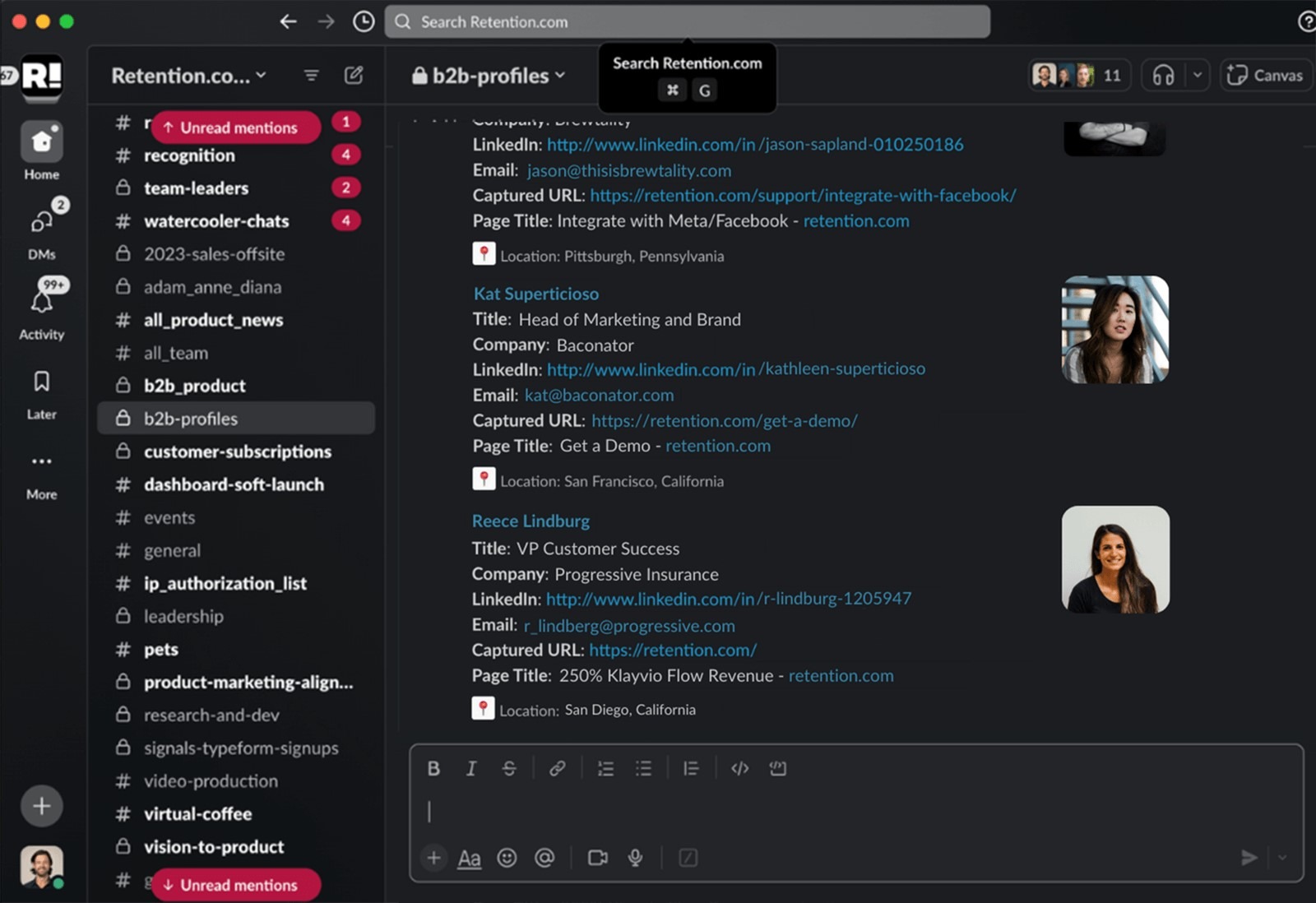
With RB2B, you eliminate the guesswork and spreadsheets that slow you down when identifying decision-makers. Instead, focus your energy on engaging prospects with precision.
Note: RB2B exclusively tracks U.S.-based traffic and is 100% COMPLIANT with CCPA and CPRA. It does not process data from EU visitors, eliminating GDPR concerns and giving you peace of mind as you scale your outreach.
To use RB2B’s Person-Level Website Visitor Identity tool, do the following:
Once you’re set, enjoy unlimited use of the tool’s premium features for 7 days. After that, you can use RB2B’s basic version FREE FOREVER or upgrade to the Pro plan for enhanced reporting and additional credits.
Ready to turn your website traffic into actionable leads? Sign up for RB2B today and make every visit count!
Bonus read: Still looking to enhance your outreach efforts? Explore our comprehensive guides covering essential concepts, actionable strategies, and effective tools for outreach success:
An outreach email is a message you send to someone you don't have an existing relationship with. You might be starting a business conversation, exploring a partnership, or introducing your product. The goal isn't to close a deal in one email. It's to earn a reply by showing you've done your homework and have something genuinely relevant to offer.
Yes. We've included three complete, ready-to-use outreach email templates earlier in this guide, covering [cold sales outreach, warm introductions, and re-engagement follow-ups]. Each one includes a subject line and full body text you can copy and customize for your own situation.
Outreach is any proactive effort to connect with someone who hasn't come to you first. In B2B sales, the most common forms are cold emails, LinkedIn messages, and phone calls to prospects who fit your ideal customer profile.
A sales rep emailing a VP of Marketing because they visited your pricing page, for example, is outreach. So is a founder sending a personalized LinkedIn message to a potential partner after meeting them at a conference.
Most effective outreach stacks combine three layers. First, an identification tool to find the right people. Website visitor identification tools like RB2B give you person-level data on who's visiting your site. That means you're reaching out to warm prospects instead of cold lists.
Second, a sending platform to manage sequences at scale. Instantly, Lemlist, and Apollo all handle that side well. Third, a CRM to track everything. For a broader look at how the main visitor identification tools compare, we've broken that down separately.
Boomerang's study of 40 million emails found that messages between 50 and 125 words get the highest response rates. The sweet spot is around 75 words. Instantly’s 2026 benchmarks suggest that top-performing cold email campaigns keep first-touch messages under 80 words. Its research also reports that 50–125-word emails achieve 2.4 times higher reply rates than emails over 200 words. Say what you need to say, make one clear ask, and stop.
Alert your reps, start automated outreach, and add to lead score in under five minutes.

